
How Fast Is Volleyball? The Amazing Real Speed of Serves, And Spikes


How fast is volleyball? Volleyball is one of the fastest sports in the world. Professional spikes can reach more than 130 km/h (80 mph), and players often react in 0.2–0.3 seconds. The combination of ball speed, athletic power, and rapid rallies makes volleyball a uniquely fast and intense sport.
Volleyball Speed Comparison Table
| Action / Metric | Typical Speed | Notes |
|---|---|---|
| Spike (Men, Pro Level) | 100–120 km/h (62–75 mph) | Fastest spikes can exceed 130 km/h. |
| Spike (Women, Pro Level) | 80–100+ km/h (50–62+ mph) | Elite hitters regularly reach 90 km/h. |
| Fastest Recorded Spike | 130+ km/h (80+ mph) | Rare but documented at top levels. |
| Jump Serve | 100–120 km/h (62–75 mph) | Some servers exceed this range. |
| Float Serve | 50–70 km/h (31–43 mph) | Slower but unpredictable due to no spin. |
| Player Reaction Time | 0.2–0.3 seconds | Required to defend spikes and serves. |
| Distance to React | 3–6 meters | Much shorter than tennis or baseball. |
| Typical Rally Duration | 5–10 seconds | Multiple actions occur within each rally. |
| Court Depth | 9 meters | Short distance increases perceived speed. |
How Fast Are Volleyball Spikes?
Spiking is the fastest action in volleyball. At the professional level, attackers regularly hit the ball at 100–120 km/h, and the hardest spikes ever recorded have gone beyond 130 km/h. Men typically reach the highest speeds because of their jump height and arm swing power, but elite women also hit well above 90 km/h.
Spikes feel even faster because the ball travels such a short distance. A ball moving at 110 km/h crosses the net in a fraction of a second, giving defenders only about 0.2–0.3 seconds to react. That’s barely enough time for the brain to process what’s happening, which is why reading the hitter’s body language is just as important as reacting to the ball itself.
How Fast Are Volleyball Serves?
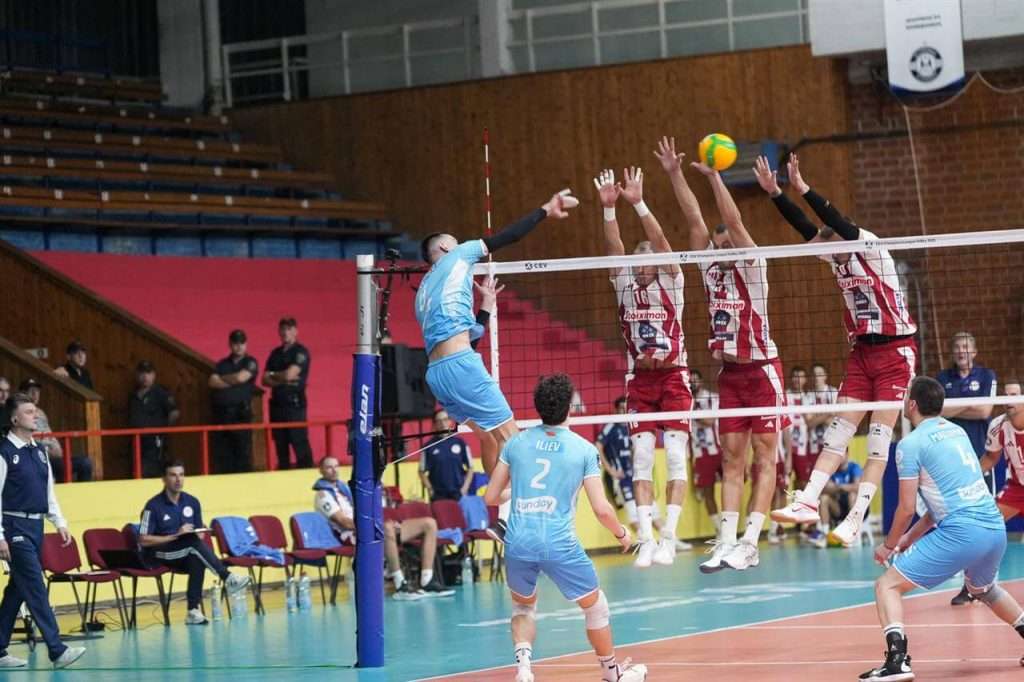
Jump serves add another layer of speed to the game. Top players often serve between 100–120 km/h, and some go even higher. Float serves are slower, usually 50–70 km/h, but they’re unpredictable because the ball has no spin. It wobbles and shifts in the air, forcing receivers to adjust instantly. The mix of speed and movement makes serve receive one of the hardest skills in volleyball.
How Fast Do Volleyball Players Move?
Volleyball players don’t just move quickly — they move explosively. The sport demands fast lateral movement, quick first steps, powerful jumps, and instant changes of direction. During a rally, players accelerate, stop, jump, land, and reposition in just a few seconds.
Middle blockers may sprint several meters in under a second to close a block. Liberos react even faster, dropping into defensive posture, shuffling, and diving almost instantly. Despite the small court size, the constant bursts of movement make volleyball physically demanding.
How Fast Is Reaction Time in Volleyball?
Reaction time is where volleyball truly becomes a high‑speed sport. When a spike travels at 110 km/h, a defender has roughly 0.25 seconds to react. For comparison:
- A baseball batter has more time to decide whether to swing.
- A tennis player reacts to a serve from much farther away.
- A football goalkeeper often has more time to read a shot.
Volleyball defenders rely heavily on anticipation. They read the setter’s body, the hitter’s approach, the angle of the shoulder, and the timing of the jump. This allows them to move before the ball is even hit. Without anticipation, defending at a high level would be nearly impossible.
Other Volleyball Stories to Read

How Fast Is a Volleyball Rally?
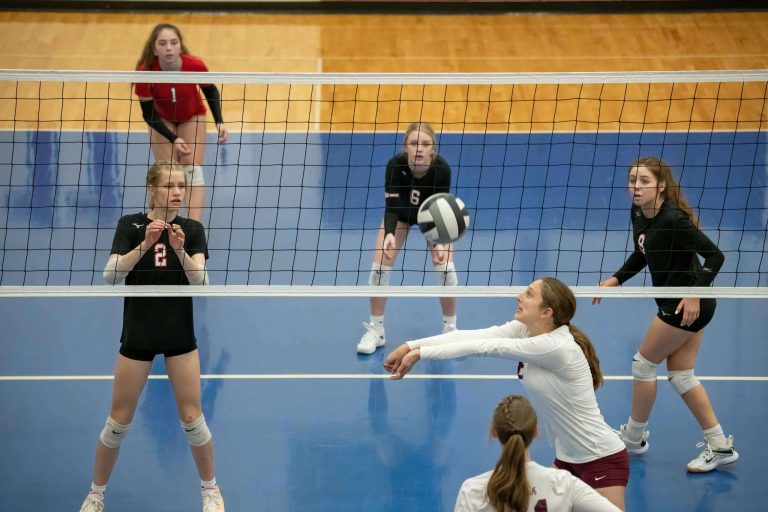
A typical rally lasts only 5–10 seconds, but a lot happens in that short time: a serve, a pass, a set, a spike, a block, a dig, and another attack. Each touch happens in less than a second, and players must reposition immediately after every action. This rapid cycle is why volleyball feels so fast and why conditioning is essential.
Why Volleyball Feels Faster Than It Looks
Watching volleyball from the stands gives you a sense of speed, but playing it feels even faster. The court is only 9 meters deep, so the ball reaches players almost immediately after being hit. The combination of short distances, high ball speeds, explosive jumps, and constant movement makes the sport feel like everything happens at once.
This is also why first‑tempo attacks (like the middle quick in front of the setter) are so effective — they reduce the reaction window even further. If you’ve read my article on What Is a Quick Attack in Volleyball, you already know how tempo plays speed up the entire offense.
How Volleyball Compares to Other Fast Sports
Volleyball holds its own against some of the fastest sports:
While volleyball spikes aren’t the absolute fastest, the reaction distance is much shorter. A tennis player stands 23 meters away. A volleyball defender stands 3–6 meters away. That makes volleyball one of the hardest sports in the world in terms of reaction speed.
| Sport / Action | Typical Speed | Notes |
|---|---|---|
| Tennis Serve | 200–250 km/h (124–155 mph) | Fastest serves in all of sport; players stand far from the server. |
| Baseball Pitch | 140–160 km/h (87–99 mph) | Reaction distance is longer than volleyball. |
| Volleyball Spike | 100–130 km/h (62–80 mph) | Reaction distance is only 3–6 meters, making it harder to defend. |
| Soccer Shot | 100–130 km/h (62–80 mph) | Similar ball speed to volleyball spikes but from much farther away. |
| Handball Shot | 90–120 km/h (56–75 mph) | Comparable to volleyball serves and spikes. |
| Ice Hockey Slapshot | 150–170 km/h (93–105 mph) | High speed but more reaction distance than volleyball. |
| Cricket Fast Bowling | 140–150 km/h (87–93 mph) | Similar to baseball pitching. |
How Players Train for Speed
Speed in volleyball isn’t just about running fast. It’s about explosive jumps, quick first steps, fast transitions, efficient footwork, and sharp reading skills. Players train speed through plyometrics, agility drills, reaction training, blocking footwork, defensive shuffles, and approach‑jump mechanics. The goal is to reduce the time between recognizing the play and executing the movement.
Wearing the right volleyball shoes can make a huge difference in your speed on the court. Check out our top volleyball shoe picks to see which models can help you move faster.
To Sum It Up
Volleyball is undeniably one of the fastest sports in the world. Spikes can exceed 130 km/h, serves often reach 110 km/h, and players react in under 0.3 seconds. The combination of ball speed, athletic power, and rapid rallies creates a sport that is intense, demanding, and thrilling to play.
Understanding the speed of volleyball not only deepens your appreciation for the game but also highlights why training for speed — both physical and mental — is essential for every player.