
Major Volleyball Rule Tests Begin in 2026
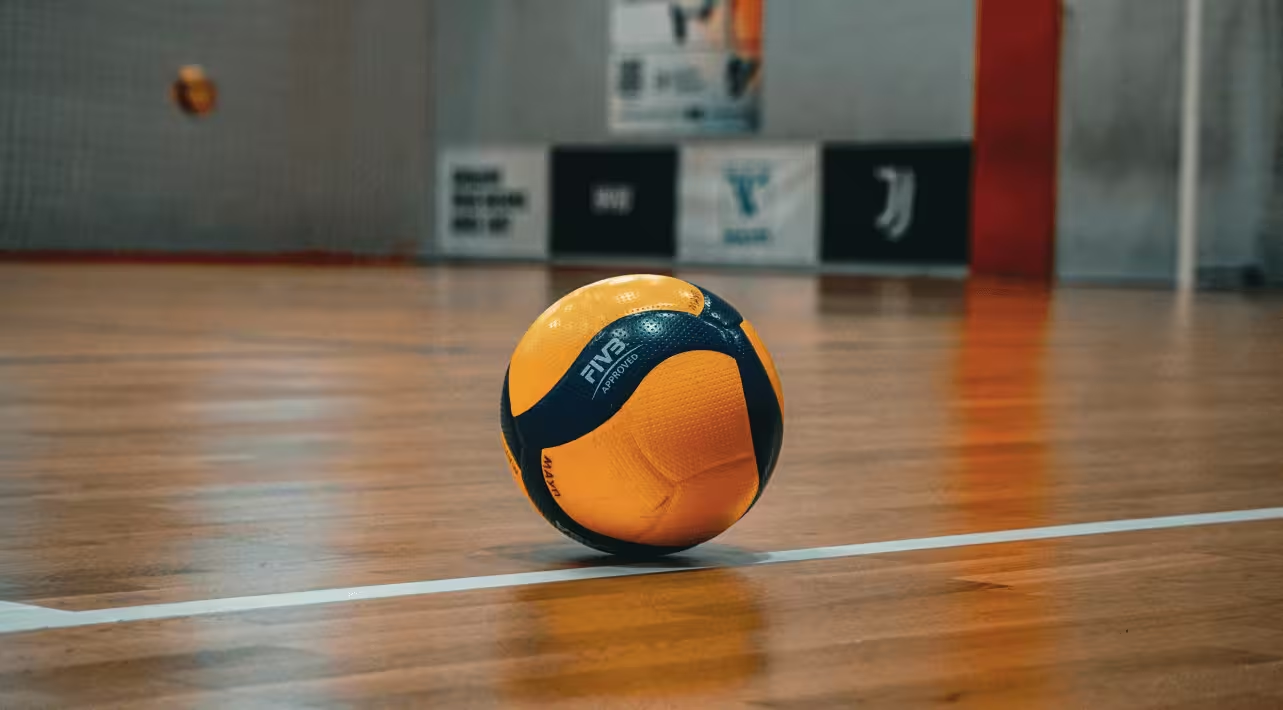
The major evolution of volleyball is approaching as the FIVB begins the trial implementation of the 2026 Rule‑Change Package. The FIVB Board of Administration has approved an extensive range of rule, regulation, and procedural tests for the 2026 season, which will be applied in the Volleyball Nations League (VNL) 2026, the FIVB U17 World Championships, and the 2026 Continental Championships. These trials form an important part of the FIVB’s long‑term strategy to develop the sport, simplify officiating, and enhance the spectator experience for a rapidly growing global fan base.
Volleyball Rule Changes 2026
FIVB officials state that the 2026 trial package represents a major step in the federation’s long‑term regulatory review, aimed at improving match flow, reducing rule complexity, and making the sport more accessible to both new and long‑time fans. No permanent changes to the Official Volleyball Rules will be made until the testing phase concludes and the FIVB has reviewed all collected data, including match footage and stakeholder feedback.
1. Interpretation of Double Contact on the Second Team Touch
Double contact on the second team touch (typically the set) will continue to be legal, provided the ball remains on the same side of the court. No rule change is required.
2. Athletes Free to Move Once the Server Initiates the Serving Motion
Receiving players must be in correct rotational order at the whistle, but may move immediately once the server begins the serving motion, whether through arm or leg movement.
3. Increase in Number of Substitutions
The number of substitutions per set will increase from six to eight, giving teams greater tactical flexibility.
4. Roster Regulations
Teams may register between twelve and fourteen athletes for FIVB events. At least one libero is required. Teams may nominate two liberos from the registered roster up to sixty minutes before the match.
5. Ball Contact with the Ceiling or Infrastructure
If the first or second team contact strikes the ceiling or venue infrastructure and remains on the same side of the court, the rally continues. If the ball rebounds into the opponent’s court, it is a fault. Contact with spider‑cam or crane‑cam equipment continues to result in a replay.
6. “Push–Carry–Catch–Throw–Tip” Attack (Strict Enforcement of Rule 9.2.2)
The FIVB will strictly enforce illegal attack contacts:
- No catches
- No throws
- No pushes
- No open‑hand directional attacks
- No open‑hand block‑outs
- No carries
Only a very short‑contact tip will be allowed, meaning the traditional soft open‑hand “pallonetto” is banned.
7. Mid‑Rally Challenge Bookmark
Teams may bookmark any action during a rally that they may want to challenge afterward.
- If a team loses the rally, it may challenge only one bookmarked action.
- If both teams bookmark actions, the first fault in the sequence prevails.
- Bookmarks must be linked to the start‑rally button to speed up review.
8. Touches in Defense and Serve Receive
Touches in defense and serve receive are now included in the Challenge Regulations. A clear and visible contact must be shown on video to overturn the original call; if no evidence exists, the original decision stands.
9. Reduced Time Between Challenge and Timeout
After a challenge result is communicated, the team that requested the challenge may not call a timeout before the next rally. The opposing team retains the right to request a timeout.
10. Use of the Referee’s Whistle
The first referee will not whistle for:
- a ball clearly landing in or out
- a serve that does not cross the net
- a clear block touch that sends the ball out of bounds
This aims to reduce unnecessary stoppages and create smoother transitions.
11. Coach Communication with the First Referee
The head coach may approach the first referee to clarify the type of challenge requested or to seek clarification about a call. Protests and complaints remain prohibited.
12. Warm‑Up Protocol
A new 90‑second separate serving warm‑up will be introduced.
- Both teams share the net for the attacking warm‑up.
- Team A receives 90 seconds for serving.
- Team B receives the next 90 seconds.
The change is intended to improve athlete safety.
Domestic‑Level Changes (USA, 2026–27)
These are not part of the FIVB rule tests but reflect broader global trends:
- Libero uniform flexibility — libero shorts may be any color
- Libero may serve in one rotation (USAV/NCAA rule, not FIVB)
- Two designated liberos, with injury re‑designation permitted
- Faster set transitions with earlier whistle warnings
Reactions from Players, Coaches, and Analysts
Reactions to the FIVB’s modernization efforts have been mixed. Many welcome the initiative, noting that volleyball has historically been slow to adopt rule changes. Others worry that introducing multiple changes simultaneously may confuse fans or alter established playing styles. In Poland, early distribution of working translations sparked significant debate on television and online forums.
What the 2026 Season Will Reveal
The 2026 season will serve as a comprehensive testing ground for the sport. Key questions include:
- Will the clarified double‑contact rule extend rallies without reducing technical precision?
- Can the streamlined video‑challenge system significantly shorten match duration?
- Will fans embrace a faster, more continuous style of play?
- Will national federations adopt similar changes based on the results of the trials?
The answers will shape the future of volleyball, influencing everything from youth development to elite competition.
Conclusion
The 2026 season marks a critical moment in the evolution of international volleyball, giving the FIVB a unique opportunity to evaluate how its proposed rule and procedural changes affect the pace, clarity, and overall quality of play. The data collected throughout the trial period will guide the next cycle of the global rulebook. Whether these tests lead to the adoption of the current proposals or further refinement, the 2026 season will be remembered as a turning point in the sport’s ongoing effort to balance tradition with modernization.