
How To Increase Speed For Volleyball

Volleyball is an extremely demanding sport. It requires tremendous energy, endurance, agility, and quickness. Most importantly, the best players are always on the move. Whether they’re sprinting across the floor, jumping explosively, or making split‑second decisions at the net, the quicker you can react and make the correct decision, the better you’ll perform.
The best volleyball players in the world possess all the essential skills — blocking, passing, setting, hitting, digging, and serving. However, many people overlook the fact that success in volleyball requires far more than just technical ability. To truly excel, you must develop the same level of speed and athleticism seen in football, basketball, or track. If you want to compete with the best, you must be willing to put in the time and effort to build this speed and athleticism.
Below are the key elements of developing the speed and movement skills needed to play volleyball at a high level — and how you can apply them to your training.
1. Develop a Fast First Step
The first step of every volleyball play is critical. It determines where you’ll end up on the court and often influences who wins the rally.
How to improve your first‑step speed:
- Stay in a low, athletic stance
- Keep your weight centered over your feet
- React to visual cues (coach, teammate, or the ball)
- Practice quick directional changes (left, right, forward, backward)
- Focus on short, explosive bursts rather than long runs
A faster first step helps you reach more balls, take away more space from opponents, and transition from defense to offense more efficiently.
2. Develop Quick, Efficient Footwork
When we talk about “speed” in volleyball, we’re really talking about footwork — the ability to move efficiently and create space to cover the court. Great players use their footwork to stay in the right position to hit, pass, set, dig, or serve.
Footwork techniques to increase your speed:
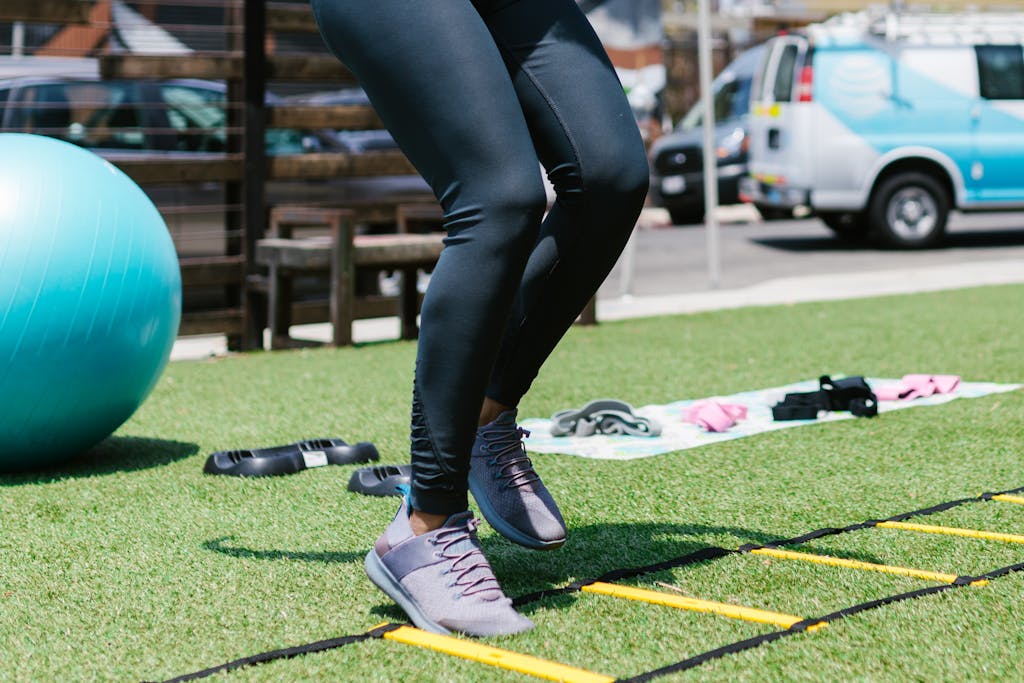
- Ladder drills to improve footwork and timing
- Crossover steps to move quickly side‑to‑side
- Quick drop steps to transition laterally
- Shuffles to move efficiently along the net
- Short acceleration drills (2–5 yards) to improve explosive starts
Good footwork allows you to move quickly and maintain strong positioning throughout the game.
3. Develop Explosive Power
Speed and explosiveness are related but not identical. Speed is how fast you move; explosiveness is how quickly you can accelerate when your foot hits the ground.
Exercises to build explosive power:
- Box jumps for vertical explosiveness
- Broad jumps for forward power
- Lateral bounds for side‑to‑side explosiveness
- Sprint starts for acceleration from a standstill
- Medicine‑ball throws for rotational power
Explosive power improves your acceleration, jump height, and ability to make big plays quickly.
4. Strengthen Your Lower Body and Core
A strong lower body and core provide the foundation for both speed and explosiveness. Strong legs allow you to accelerate and decelerate powerfully, while a strong core improves stability, balance, and injury prevention.
Strength exercises for lower body and core:
- Squats and lunges for quads, hamstrings, glutes, and calves
- Romanian deadlifts for hamstrings and glutes
- Hip thrusts for glute strength
- Calf raises for lower‑leg power
- Planks and anti‑rotation exercises for core stability
A stronger lower body improves acceleration and explosiveness, while a strong core enhances balance and control.
5. Improve Your Reaction Time
Reaction time often separates good volleyball players from great ones. Because the game changes rapidly, you must be able to process information quickly and respond instantly.
Ways to train reaction time:
- Partner reaction drills (left, right, drop, etc.)
- Random‑direction cone drills
- Reading the setter and hitter during live reps
- Ball‑tracking drills
- Visual reaction apps or light‑based reaction tools
The faster you can react, the faster you can make decisions and execute plays.
6. Train Change‑of‑Direction Speed
Volleyball rarely involves straight‑line running. You’re constantly stopping, starting, and changing direction. Developing quick change‑of‑direction ability is essential.
Change‑of‑direction drills:
- T‑drills
- 5‑10‑5 shuttle
- Cone zig‑zag patterns
- Short lateral sprints
- Backpedal‑to‑sprint transitions
Improving your ability to change direction helps you move more fluidly and maintain speed throughout the match.
7. Improve Your Transition Speed
Slow transitions can kill your team’s rhythm. Quick transitions from defense to offense (and vice versa) give your team more scoring opportunities and put pressure on opponents.
How to improve transition speed:
- Push off the net immediately after landing
- Stay low with your weight centered
- Create enough space to build momentum
- Turn your body toward the setter early
- Flow smoothly into your approach
- Return to the front row quickly and stay in rhythm
Fast transitions help your team stay aggressive and unpredictable.
Bonus Tips to Help You Play Faster
- Stay relaxed — tension slows you down
- Minimize unnecessary steps
- Maintain a low center of gravity
- Warm up thoroughly to activate fast‑twitch muscles
- Record your movement to identify wasted steps
- Train speed 2–3 times per week
Overall
To play faster in volleyball, you must improve your speed, explosiveness, reaction time, and movement efficiency. Once you develop these traits, you’ll move more quickly, play more effectively, and dominate the competition.etter volleyball player! If you have any questions, feel free to contact us!